1. I need a name for my newspaper column.
2. Two hour delays in which you lose your plan period and have to start a new unit and are late because you had a dead car battery are not a nice way to start school again. But drowning your sorrows in hot cocoa & Milanos with your son at the coffee shop helps.
3. Parents do truly want us to be superhuman. And when you're simply human, they write nastygrams...
4. Tonight will be a long, difficult night at Plymouth Elementary School as we toll over the budget and saving teacher positions.
5. Our grades are now online. Hmmm.
6. I hope the teachers are receptive as I start visiting schools. Very nervous about that. What do I say?
7. How can I start a school in a Mayan village in Mexico...? It's practically all I think about.
8. PhD or EdD? Macaroni & cheese or Chop suey? Treadmill or icy roads? Decisions.
9. I need a publisher for my students' Sudanese book.
10. Too many conversations today with teachers who feel like their options are burn out, complacency, or change of career...why is it like this?
Monday, March 7, 2011


Friday, March 4, 2011
A Rested Brain...& A New Newspaper Column
I am just landing back in reality after a self-admittedly indulgent, warm vacation with my family in St. John that will probably mean we eat only rice, beans, and pasta for the next 6 months and my kids will have clothes with holes in them that ride high above their ankles...but it was much needed for my family life, my marriage, and my professional brain. I'm feeling a bit more centered and had many long beach talks with my husband that helped me really focus on what I (we, actually)want to do over the course of the next year and over our lives in terms of education and our own personal balance.
With a refreshed outlook and renewed energy, I have returned to find that my first newspaper column was published in Foster's Daily Democrat, and will soon be published in The Record Enterprise. My email box was full of warm response, mostly from parents, and I thank them for that. I am so honored that they took the time to read my ramblings!
I'm behind in my posts...I feel like I need to write about recent events in Wisconsin, NH trends in education voting, the event my students shouldered a couple of weeks ago that raised money for Sudan and their next steps...
For now, here's the link to the new article; I'll update as soon as I'm totally reentered!
Foster's Daily Democrat Article
With a refreshed outlook and renewed energy, I have returned to find that my first newspaper column was published in Foster's Daily Democrat, and will soon be published in The Record Enterprise. My email box was full of warm response, mostly from parents, and I thank them for that. I am so honored that they took the time to read my ramblings!
I'm behind in my posts...I feel like I need to write about recent events in Wisconsin, NH trends in education voting, the event my students shouldered a couple of weeks ago that raised money for Sudan and their next steps...
For now, here's the link to the new article; I'll update as soon as I'm totally reentered!
Foster's Daily Democrat Article
Wednesday, February 9, 2011
Confessions of a TOY on a February Wednesday
I can’t get my grades done on time. I yelled at my son this morning because he whined about having to eat cereal with no milk. I was 15 minutes late to work. I run 3 miles a few times a week on the treadmill, even though my body is craving 6 outside daily. There is literally no food in our refrigerator or cupboards. The laundry is pouring out of the chute, and I had to wash one load twice because it sat in the washer so long it began to smell musty. And speaking of smells…somewhere in my house is a piece of rotting citrus. I’m not sure where it is exactly, as my fruit bowl is empty, and I’m not sure why none of my other family members can’t smell this, but I guess eventually it will get bad enough that perhaps they will be the ones to unearth it. I have a suitcase that still hasn’t been emptied from Dallas and one that still isn’t emptied from New York sitting in my bedroom next to piles of unfolded, clean clothes. It’s 4:49 pm and I’m enjoying a few moments to myself with a cup of cocoa and a pastry at Panera Bread after a meeting…and I know I should be grading or cleaning or parenting…and in fact, I’m not even sure where all my children are at the moment, but I just needed to sit in peace for a while. But the peace is barely tangible since the guilt of having a few moments to myself is so loud in my conscience.
This morning, driving to school, I had to wipe away the tears that were freezing to my cheeks, blurring my vision. How do I get everything done? How do I parent and wife and teach and clean and lead all at the same time? Is it even possible to do it all well? Or do I have to succumb to doing everything half-ass? Is it in fact true that once you win teacher of the year, you spend the next year being a bad teacher?
2007 National Teacher of the Year, Mike Geisen, sat with me in Dallas one evening and talked about Balance. Be honest, he said, and people will understand. Be honest to your students, your children, and your husband—tell them you can’t do it all, and they’ll support you. They’ll get that. I try that, and they do understand, I think, but it’s not them who always impose these expectations—it’s parents, colleagues, administrators, and probably most of all, me. Ironically, the ones who understand the most are the ones who pay the most.
February is the month when days start to get longer in New Hampshire, and our ambitions start to emerge from the snowbanks of a long, dark January. But we need to remember that we are not superheroes—no matter what our movie directors or unions say—and we need to keep our ambitions in check. We are people who need to run and play outside. We need to watch TV with our kids on Friday nights and have dates with our partners. We need to sleep late on weekends and hike mountains. We must strive to find that balance by stepping back and examining the expectations others have put on us and prioritize. We must step back and examine our own expectations of ourselves and eliminate the unnecessary. We need to remember to feed our souls—and—to be honest, as Mike instructed—it’s okay to do that at Panera Bread on a Wednesday evening by yourself. It’s okay.
Tuesday, February 8, 2011
Sudan Becoming Reality for My Students
| For the past few weeks my team and I have embarked on an interdisciplinary unit about Sudan with grades 6-8. I have found, in the past, that to make cultural studies real to students, you really have to put a face to the issue. Yesterday, Achier Mou, a Sudanese "Lost Boy" with impeccable grace, kind-hearted humor, and an astonishing perspective on life, presented his reality to my students. Our classrooms must have no walls--we need to bring our students out into the world and bring the world in to meet them. Yesterday, the offical results of the Sudanese referendum were announced--and how amazing that our youth (and we!) are witnessing a new country being born! There is great hope in Southern Sudan, and with the median age being 18.4 years, we can anticipate this country being part of our students' reality for years to come. I hope that they will grow to be helpers... This is the newspaper write up from our local paper: Sudan Survivor Brings His Story to Holderness Central February 08, 2011 |

Achier Mou, one of the “lost boys” of the Sudan who were separated from their families during the African nation’s long and bloody civil war, shared his story of survival with students at the Holderness Central School Monday. (Brendan Berube)
HOLDERNESS — It's one thing to read about tragic events like the long and bloody civil war that plagued the African nation of Sudan for nearly 20 years in a book or magazine, but quite another to hear about those events first-hand from someone who lived through them.
Earlier this week, a special visitor helped students at the Holderness Central School lift the Sudanese war out of the pages of their textbooks by putting a human face on it with the moving story of how he escaped from, and triumphed over, its devastating effects.
Born and raised in a small village in southern Sudan, Achier Mou was forced to flee from his homeland at the age of five, when he returned home from tending to his family's cattle in the fields (one of the responsibilities that he said all Sudanese boys are brought up with) to find that militia recruited by the corrupt and oppressive Sudanese government to put down a rebellion in the southern part of the country had attacked his village and burned the only home he had ever known to ashes.
Separated from his mother and two older brothers, whose fate he did not know at the time, and left with "no places to hide," Mou joined up with a group of fellow refugees who decided to travel across southern Sudan to neighboring Ethiopia.
Left without much in the way of possessions and able to carry only what provisions they could bear and still move quickly if necessary, Mou said he and the other survivors were forced to travel by night in order to keep out of sight of the government's roving militia units and the wild animals roaming the countryside.
If you were able to eat a meal large enough to fill your stomach during the journey, you were doing well, he said, explaining that the for the most part, the refugees learned to subsist on empty or only partially full stomachs.
Left with no shoes during the long trek, Mou also vividly recalls the painful blisters that formed on the bottoms of his feet.
Asked by one of the middle school students listening to his presentation Monday whether his band of survivors had lost anyone along the way, Mou said that one member of the group did fall behind, and was hopefully taken in by a sympathetic family (something that he said happened frequently, particularly with the younger boys).
"'Cause we were cute," the good natured Mou added with a chuckle.
Eventually, he said, the group arrived at a refugee camp in Ethiopia, where they joined 16,000 other children who had been separated from their families during the war.
After living at the camp in Ethiopia for four years, Mou and his fellow Sudanese refugees once again fell victim to political turmoil when they were told to leave the country after the Ethiopian government was overthrown.
Mou fled to Kenya, where he spent the next nine years learning English and furthering his education at a UN refugee camp until, in 2000, a bishop from Boston who had visited the camp persuaded the U.S. government to open its doors to some of the "Lost Boys" of the Sudan. Mou himself was able to immigrate to New England in 2001, shortly before the Sept. 11 terrorist attacks forced a halt to the program. In the years since, he earned a Bachelor's degree from Tufts University in Boston, and is currently working toward a Master's degree in Global Health that he hopes to use one day in the service of his home country.
Mou never lost hope that he would one day find his long lost family, and returned to Sudan after the war ended, in 2006, to search for them. Although his efforts proved unsuccessful the first time, he visited the country again in 2007, a trip that culminated in a joyous reunion with his mother and brothers.
Now in his late 20's, Mou hopes to return to Sudan permanently once his education is complete, and has been heavily involved in efforts to bring relief to his long suffering people as a board member of the Sudan Development Foundation (SUDEF), an organization founded in 2009 by Abraham Awolich that works to break the cycle of poverty in southern Sudan and make the region self sufficient by raising funds for clinics, microfinancing, and sustainable development.
Mou also helped make Sudanese history last month by helping southern Sudanese refugees living in the Northeast register to vote on a referendum to separate from the rest of the country and form an independent government.
Voicing his hope that more people will step up and help SUDEF in its efforts to re-build and re-invigorate southern Sudan — "it can only go far if all of us chip in," he said — Mou challenged the students at Holderness Central to make a difference in their own way by joining the Peace Corps or other relief organizations once they finish their education.
"It's a good way to gain some experience and a different perspective," he said.
The students who heard Mou's story said his presentation brought the impact of the Sudanese war home to them in a way that no textbook could have.
Aurora Desmarais said that after hearing stories about Sudan and reading about what an emotional experience it was for so many, she found it interesting to hear that Mou "had a different side of the story" — that for him, it was purely a matter of survival, and that he never really had a chance to get emotional about what happened to him.
Hearing from someone who lived through the events in Sudan "really hits on a deeper level," said Jake Rossner.
Hearing Mou's story, he said, made him realize that "people can actually do something to help."
Earlier this week, a special visitor helped students at the Holderness Central School lift the Sudanese war out of the pages of their textbooks by putting a human face on it with the moving story of how he escaped from, and triumphed over, its devastating effects.
Born and raised in a small village in southern Sudan, Achier Mou was forced to flee from his homeland at the age of five, when he returned home from tending to his family's cattle in the fields (one of the responsibilities that he said all Sudanese boys are brought up with) to find that militia recruited by the corrupt and oppressive Sudanese government to put down a rebellion in the southern part of the country had attacked his village and burned the only home he had ever known to ashes.
Separated from his mother and two older brothers, whose fate he did not know at the time, and left with "no places to hide," Mou joined up with a group of fellow refugees who decided to travel across southern Sudan to neighboring Ethiopia.
Left without much in the way of possessions and able to carry only what provisions they could bear and still move quickly if necessary, Mou said he and the other survivors were forced to travel by night in order to keep out of sight of the government's roving militia units and the wild animals roaming the countryside.
If you were able to eat a meal large enough to fill your stomach during the journey, you were doing well, he said, explaining that the for the most part, the refugees learned to subsist on empty or only partially full stomachs.
Left with no shoes during the long trek, Mou also vividly recalls the painful blisters that formed on the bottoms of his feet.
Asked by one of the middle school students listening to his presentation Monday whether his band of survivors had lost anyone along the way, Mou said that one member of the group did fall behind, and was hopefully taken in by a sympathetic family (something that he said happened frequently, particularly with the younger boys).
"'Cause we were cute," the good natured Mou added with a chuckle.
Eventually, he said, the group arrived at a refugee camp in Ethiopia, where they joined 16,000 other children who had been separated from their families during the war.
After living at the camp in Ethiopia for four years, Mou and his fellow Sudanese refugees once again fell victim to political turmoil when they were told to leave the country after the Ethiopian government was overthrown.
Mou fled to Kenya, where he spent the next nine years learning English and furthering his education at a UN refugee camp until, in 2000, a bishop from Boston who had visited the camp persuaded the U.S. government to open its doors to some of the "Lost Boys" of the Sudan. Mou himself was able to immigrate to New England in 2001, shortly before the Sept. 11 terrorist attacks forced a halt to the program. In the years since, he earned a Bachelor's degree from Tufts University in Boston, and is currently working toward a Master's degree in Global Health that he hopes to use one day in the service of his home country.
Mou never lost hope that he would one day find his long lost family, and returned to Sudan after the war ended, in 2006, to search for them. Although his efforts proved unsuccessful the first time, he visited the country again in 2007, a trip that culminated in a joyous reunion with his mother and brothers.
Now in his late 20's, Mou hopes to return to Sudan permanently once his education is complete, and has been heavily involved in efforts to bring relief to his long suffering people as a board member of the Sudan Development Foundation (SUDEF), an organization founded in 2009 by Abraham Awolich that works to break the cycle of poverty in southern Sudan and make the region self sufficient by raising funds for clinics, microfinancing, and sustainable development.
Mou also helped make Sudanese history last month by helping southern Sudanese refugees living in the Northeast register to vote on a referendum to separate from the rest of the country and form an independent government.
Voicing his hope that more people will step up and help SUDEF in its efforts to re-build and re-invigorate southern Sudan — "it can only go far if all of us chip in," he said — Mou challenged the students at Holderness Central to make a difference in their own way by joining the Peace Corps or other relief organizations once they finish their education.
"It's a good way to gain some experience and a different perspective," he said.
The students who heard Mou's story said his presentation brought the impact of the Sudanese war home to them in a way that no textbook could have.
Aurora Desmarais said that after hearing stories about Sudan and reading about what an emotional experience it was for so many, she found it interesting to hear that Mou "had a different side of the story" — that for him, it was purely a matter of survival, and that he never really had a chance to get emotional about what happened to him.
Hearing from someone who lived through the events in Sudan "really hits on a deeper level," said Jake Rossner.
Hearing Mou's story, he said, made him realize that "people can actually do something to help."
Sunday, January 30, 2011
Making Change Now--Final Thoughts on Dallas
Since September 28, when I was announced as NH Teacher of the Year, I have been grappling with the reasons why I was chosen--there are so many competent, effective teachers in our state, and not very many of them get the recognition they deserve. I have held, since that September morning, the complete understanding that I do not sit here as the best teacher in the state--I am simply a representative of the best teachers that we are so fortunate to have, from the north country to the Manchester schools. And while I have been quite comfortable understanding that, I have not understood how I would be expected to represent our teachers.
This week the 2011 National Teacher of the Year Program Conference has clarified that for me. We have spent the past 5 days here in Dallas receiving training in lobbying policy makers, navigating political roadblocks, defining and refining our messages, public speaking strategies, media savviness, and using our voice to represent the whole. I feel as though I have been groomed to return home and begin my job for the year. And while I am so relieved that the job expected of me is the job I have craved, I am fearful of what lies ahead of me, for it is foreign to me and very much exists in the unknown.
This week I have come up with many ideas, but these are some of the following plans I intend to act upon:
This week the 2011 National Teacher of the Year Program Conference has clarified that for me. We have spent the past 5 days here in Dallas receiving training in lobbying policy makers, navigating political roadblocks, defining and refining our messages, public speaking strategies, media savviness, and using our voice to represent the whole. I feel as though I have been groomed to return home and begin my job for the year. And while I am so relieved that the job expected of me is the job I have craved, I am fearful of what lies ahead of me, for it is foreign to me and very much exists in the unknown.
This week I have come up with many ideas, but these are some of the following plans I intend to act upon:
- Over the course of the next year I will visit districts across the state, meeting teachers and hearing their issues.
- I would like to start up round table groups so that I understand what issues our state's teachers are most concerned with and how I can best represent them to our policy makers.
- I will be contacting our state universities and visiting with pre-service teachers.
- I will be contacting our state newspapers and requesting that I be allowed to write a monthly educational article showcasing the work that is done in our state.
- I will be pursuing funding to pilot a parent education program that steps outside of the box and begins to create data that shows that parent involvement is essential and that our schools are responsible for making this happen, because there will never be any legislation that includes parents and community in our schools.
- I will promote the Teacher of the Year program, with the intention that more teachers from districts across the state take the time to honor the talented, amazing staffs they are fortunate to have.
- I will meet with policy makers about educational funding issues that our state is grappling with.
Saturday, January 29, 2011
Correspondence from Dallas(for my students)
Hello Holderness Central School!
So here I am in Dallas with ALL of the National State Teachers of the Year. I am SO honored to be here with them. I have met such fascinating, wonderful people who have amazing stories to tell. They have heard all about you as well!
Here are some pictures from my trip so far. I will take more tomorrow!






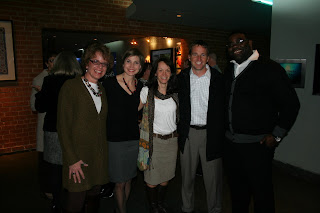


So here I am in Dallas with ALL of the National State Teachers of the Year. I am SO honored to be here with them. I have met such fascinating, wonderful people who have amazing stories to tell. They have heard all about you as well!
Here are some pictures from my trip so far. I will take more tomorrow!

This is the hotel where we are staying--it's beautiful!


Everywhere in the hallways are these beautiful, large pieces of artwork. This is one of my favorites.

This is the reception area where we get our tea & coffee each morning and gather for pre-dinner discussions.

Aaah...and the heated, outside pool. Today it was actually in the 70s, so we got to go in! By next week it will be down in the 30s though, so we are very lucky today!

These are the Delaware, Utah, Massachussetts, and Kansas teachers enjoying the hot tub. See the blue bottle? All of our water comes in those cool bottles...

Bamboo! Just thought it was cool...

These are the North Carolina, Caliornia, and Florida teachers--Cheryl, the Florida teacher on the far right is a finalist for National teacher! She's a very very sweet lady.

This is my new, new dear friend, Wilma Ortiz from Massachussetts. She teaches English as a Second Language in Amherst to middle school students. She is SO much fun--you would LOVE her!

North Carolina, Delaware, and Massachussetts...two of them are crazy middle school teachers, can you tell?

This is my friend Joe--he teaches 6th grade in Delaware. Umm...I'm not sure what to say about him, I think this speaks for itself as to why he has chosen a profession that involves middle schoolers. Same sense of humor.

We had a dinner at the Dallas Aquarium. From left to right, this is Laurie from Wyoming, Jennifer from North Carolina, me, Mike from Oregon (he was the 2008 National Teacher of the Year), and John from Washington DC.

These are previous National Teachers of the Year. They sit and guide us through our conversations and while the rest of us think they are rock stars, really, they're just regular people here like everybody else.

Wilma--Massachusetts; Jennifer--No. Carolina; Darrin--California; Jay--Washington state

We are getting a Smart Board for our classroom! The SMART people came and gave us an entire day's worth of instruction on how to use the equipment we are receiving. Oh my goodness, you guys are going to LOVE it! I learned so much and am very excited to start using it!

Part of what we receive is a classroom set of student response systems. You can take multiple choice, math, or short answer tests/quizzes/evaluations on these and have them instantly scored. Your teacher can create automatic charts based on what your answers were. We are also getting a SMART slate, so the activity/quiz, etc. can be put on the slate and projected onto any white board and you can still use the response systems! This means any of your teachers can borrow the response systems--they don't just have to be used in my room! It is absolutely amazing. They should be here after February vacation!

The Dallas Aquarium
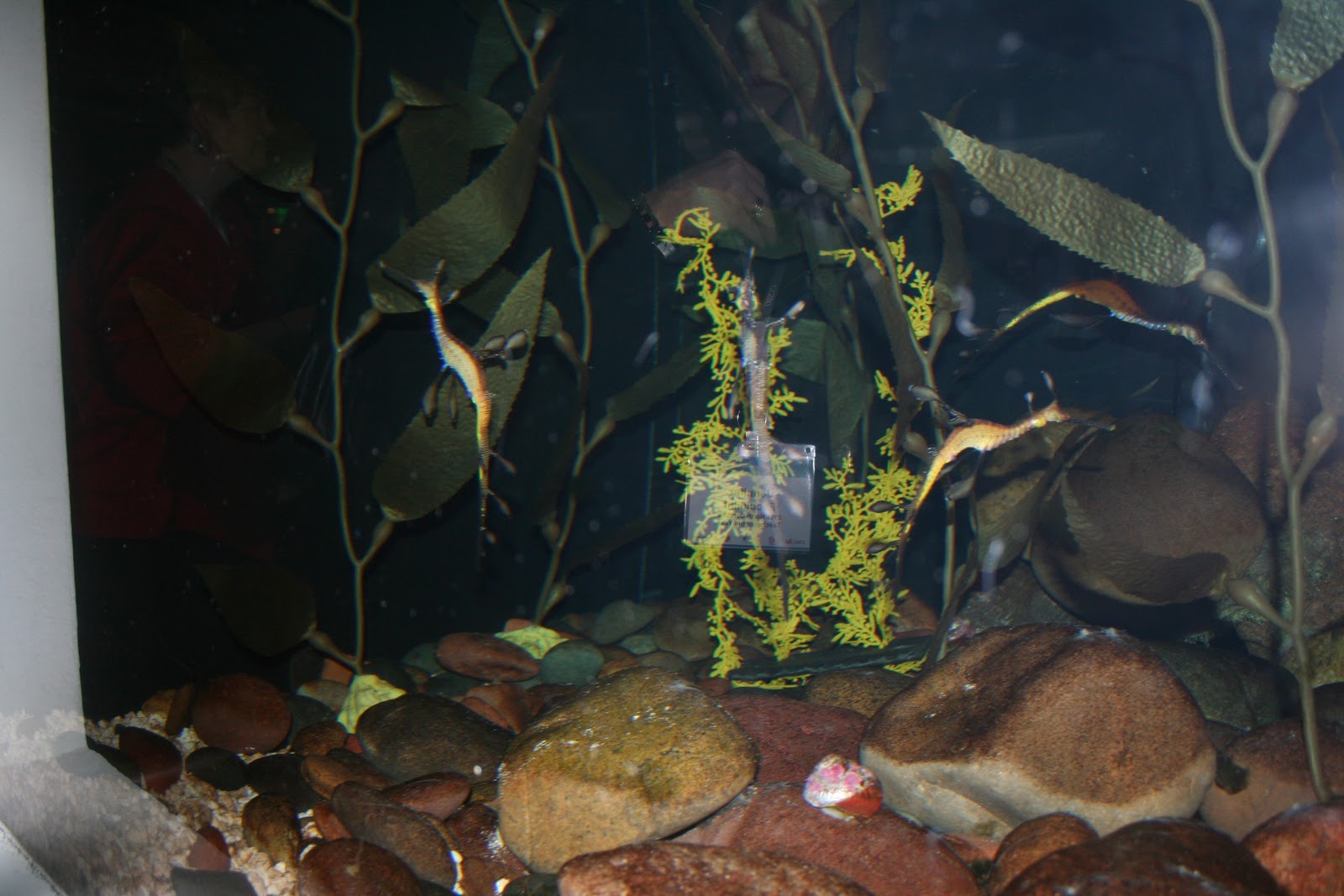

This was our dinner at the aquarium. Here we were each given full scholarships for a bachelor's or master's degree that we are able to grant to any community member to the University of Phoenix, which has campuses in New Hampshire. I still can't believe that I have the opportunity to help a former student or a single parent get his or her degree. What an honor!

Today's lunch was sponsored by People to People.

Typical plate of food--I have been running every morning so I can burn some of this off! I have eaten SO much this week!
I miss our classroom--and I'm looking forward to returning to where I am most comfortable, but I have received so much invaluable information this week on how to speak to groups across the state and how to help make change at a state and federal level in education. It has been an experience like no other. I have made friends that I am excited to visit with throughout the year, and that I know will last a lifetime. They are simply amazing people and passionate teachers. I cannot believe that I have been awarded the opportunity to be here in the midst of such greatness! I will try to take more pictures tomorrow--my last day here--and will see you on Monday! I hope everything is going smoothly--I miss you all!
Tuesday, January 18, 2011
Michelle Rhee's Commentary on Marketplace (NPR)
Tonight, Michelle Rhee, the former, controversial Education Chancellor of Washington DC read this commentary on NPR's Marketplace. It is such an honest look at how we praise children and students--she makes me stop and think. What is the balance between instilling self confidence, making students feel positive about their learning environments and raising students who are honestly aware of the talents and their weaknesses? How do we help students work hard and realize their goals? This commentary comes in the aftermath of a new book that is out by Amy Chua about the difference between Asian and Western parenting styles.
What is the best way to raise our kids? What is the best way to praise our students? Do the results of these issues truly impact our economy and educational reform? I don't have the answers, but Ms. Rhee's commentary certainly gives us food for thought.
We've lost our competitive spirit. We've become so obsessed with making kids feel good about themselves that we've lost sight of building the skills they need to actually be good at things.
I can see it in my own household. I have two girls, 8 and 12, and they play soccer. And I can tell you that they suck at soccer! They take after their mother in athletic ability. But if you were to see their rooms, they're adorned with ribbons, medals and trophies. You'd think I was raising the next Mia Hamm.
I routinely try to tell my kids that their soccer skills are lacking and that if they want to be better, they have to practice hard. I also communicate to them that all the practice in the world won't guarantee that they'll ever be great at soccer. It's tough to square this though, with the trophies. And that's part of the issue. We've managed to build a sense of complacency with our children.
Take as a counterpoint South Korea, where my family is originally from. In Korea, they have this culture that focuses on always becoming better. Students are ranked one through 40 in their class and everyone knows where they stand. The adults are honest with kids about what they're not good at and how far they have to go until they are number one. Can you imagine if we suggested anything close to that here? There would be anarchy.
There are many nations who have figured out what works in education. Look at Singapore. Last summer, I heard the prime minister gave a speech in which he outlined the plan for making Singapore number one in the world, financially. His economic plan was rooted in education. He knows that if the country can make its education system the best in the world, economic success will follow.
That's the opposite of what we do here in America. We see education as a social issue, not an economic one. And what happens to social issues in times of economic hardship? They get swept under the rug. We need to change our national conversation on education and our national culture on how we encourage kids. I think what's becoming clear with all of this, is that if we don't start to shift our perspective, we'll never regain our position in the global marketplace.
What is the best way to raise our kids? What is the best way to praise our students? Do the results of these issues truly impact our economy and educational reform? I don't have the answers, but Ms. Rhee's commentary certainly gives us food for thought.
Education reform needs a new starting point
by Michelle RheeWe've lost our competitive spirit. We've become so obsessed with making kids feel good about themselves that we've lost sight of building the skills they need to actually be good at things.
I can see it in my own household. I have two girls, 8 and 12, and they play soccer. And I can tell you that they suck at soccer! They take after their mother in athletic ability. But if you were to see their rooms, they're adorned with ribbons, medals and trophies. You'd think I was raising the next Mia Hamm.
I routinely try to tell my kids that their soccer skills are lacking and that if they want to be better, they have to practice hard. I also communicate to them that all the practice in the world won't guarantee that they'll ever be great at soccer. It's tough to square this though, with the trophies. And that's part of the issue. We've managed to build a sense of complacency with our children.
Take as a counterpoint South Korea, where my family is originally from. In Korea, they have this culture that focuses on always becoming better. Students are ranked one through 40 in their class and everyone knows where they stand. The adults are honest with kids about what they're not good at and how far they have to go until they are number one. Can you imagine if we suggested anything close to that here? There would be anarchy.
There are many nations who have figured out what works in education. Look at Singapore. Last summer, I heard the prime minister gave a speech in which he outlined the plan for making Singapore number one in the world, financially. His economic plan was rooted in education. He knows that if the country can make its education system the best in the world, economic success will follow.
That's the opposite of what we do here in America. We see education as a social issue, not an economic one. And what happens to social issues in times of economic hardship? They get swept under the rug. We need to change our national conversation on education and our national culture on how we encourage kids. I think what's becoming clear with all of this, is that if we don't start to shift our perspective, we'll never regain our position in the global marketplace.
Subscribe to:
Posts (Atom)